What to Combine Vitamin K2 With
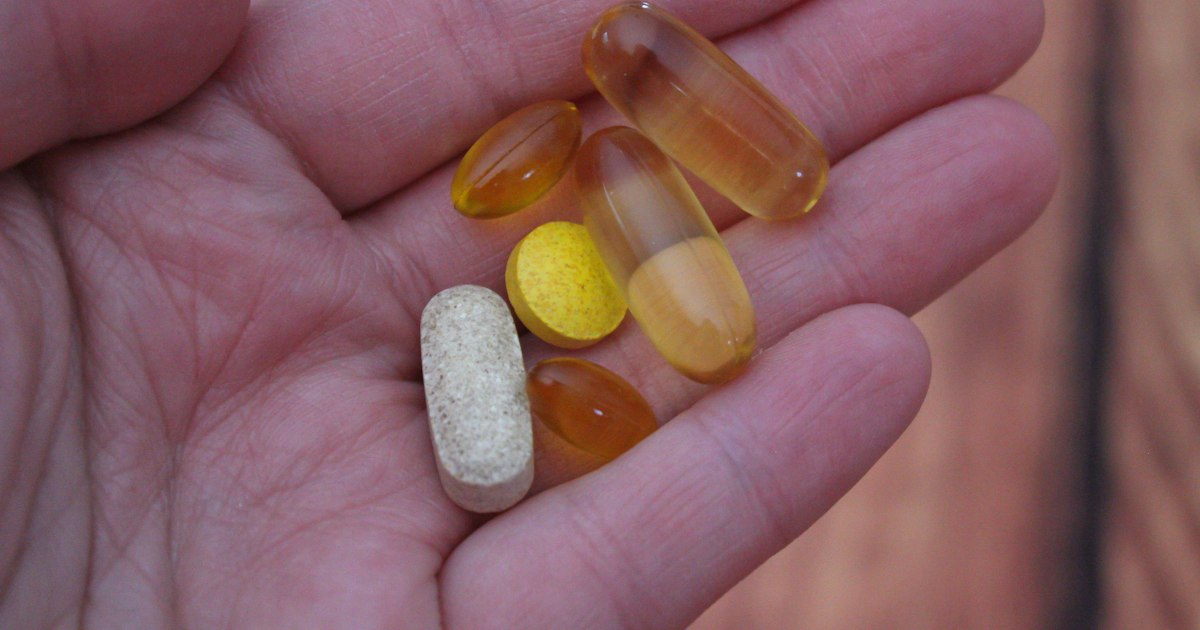
Vitamin K2 is rarely taken on its own: most often it is part of complexes with vitamin D3, calcium, or magnesium. But not every combination is equally logical, and some pairings require caution. The editorial team explains which partners for K2 have a scientific basis, how to organize intake, and when it is better to avoid a combination.
Why the “context” of intake matters for K2
Vitamin K2 (menaquinones, most often in the form of MK-7 or MK-4) is a fat-soluble substance. This means that its absorption in the intestine depends on the presence of fats and the normal function of bile and pancreatic enzymes. Taking it on an empty stomach or with completely fat-free food reduces absorption.
The second reason is functional. K2 works as a cofactor of the enzyme gamma-glutamyl carboxylase, which activates vitamin K-dependent proteins: osteocalcin in the bones, matrix Gla-protein in the vessels, and clotting factors in the liver. The amount of these proteins, in turn, is partly regulated by other nutrients, in particular vitamin D.
The third reason is interactions. There are drugs that directly compete with vitamin K or impair the absorption of fat-soluble vitamins. For such cases the question of “what to combine it with” turns into a question of safety.
That is why it makes sense to regard K2 not as an isolated capsule but as part of a system: the diet, other supplements, medications, and the state of digestion. Below we will go through each of these levels.
Vitamin D3 and K2: the most popular pair
Vitamin D increases calcium absorption in the intestine and stimulates the synthesis of osteocalcin. However, osteocalcin becomes functional only after carboxylation, which vitamin K provides. Hence the idea that D “orders” the protein and K2 “brings it into working condition”. Biochemically this scheme is correct.
In clinical studies, the combination was studied mainly in postmenopausal women and in people with osteopenia, with varying results regarding bone mineral density. There is no convincing data that the combination gives athletes an advantage in performance.
In practice, the pairing is convenient: both vitamins are fat-soluble, they can be taken together during the main meal containing fats. Many manufacturers produce ready-made D3+K2 complexes, which simplifies the regimen.
It is important not to treat K2 as “insurance” that allows increasing the dose of vitamin D without monitoring. The dose of D should be chosen according to the level of 25(OH)D in a blood test and a doctor’s recommendations; the Endocrine Society guidelines (Holick et al., 2011) define the target levels and upper limits regardless of K2 intake.

Calcium, magnesium, and other minerals
Calcium is often added to complexes with K2 following the same “delivery to the bones” logic. However, for most people the main source of calcium should be food: dairy products, fortified drinks, legumes, almonds, small fish with bones. Calcium supplements are appropriate when the diet clearly does not cover the requirement.
K2 does not change calcium absorption and does not require calcium to be taken at the same time. So if you already take calcium separately, there is no need to synchronize it with K2 in time. It is more useful to split large doses of calcium into several intakes, because the absorption of a single large portion decreases.
Magnesium participates in vitamin D metabolism and in bone mineralization. No direct interaction with K2 has been described, so the pairing is neutral: it can be taken together if there are indications for magnesium. Zinc, boron, and other trace elements in “bone” complexes have a weaker evidence base.
The only practical nuance is that large doses of minerals combined with fat-soluble vitamins can cause stomach discomfort. If this is a problem, it is better to take K2 and D3 with lunch and the minerals with dinner.
Dietary fats and digestive disorders
For fat-soluble vitamins, the key “partner” is not another supplement but the fat on the plate. Taking K2 together with a breakfast containing eggs, cheese, avocado, or olive oil provides better conditions for micelle formation and absorption than taking it with black coffee on an empty stomach.
A number of K2 preparations are produced in oil-based capsules, which partly compensates for a lack of fat in food. However, even in this case, taking it with a meal remains the simplest recommendation.
People with fat malabsorption — after bariatric surgery, with celiac disease, chronic pancreatitis, cholestatic diseases — have a higher risk of vitamin K deficiency. For them, supplements are selected by a gastroenterologist, sometimes in special water-soluble forms.
A separate situation is prolonged use of broad-spectrum antibiotics. The gut microbiota synthesizes part of the menaquinones, and suppressing the bacteria can reduce this contribution, although its significance for a person’s overall status is still debated.
- Take K2 with a meal that contains at least a small amount of fat.
- Combine it with D3 in a single intake — this is convenient and physiologically logical.
- Calcium and magnesium can be taken at any other time of day.
- Do not count on K2 as “compensation” for excessive doses of vitamin D.
Undesirable and dangerous combinations
The most important restriction concerns vitamin K antagonists — warfarin and acenocoumarol. Their action is based precisely on blocking the vitamin K cycle, so additional intake of the vitamin weakens anticoagulation. The review by Holbrook et al. (2005) lists foods and supplements containing vitamin K among the best-known factors that alter the effect of warfarin.
MK-7 has a long half-life, so even moderate doses can steadily change the INR reading. Patients on warfarin should not start or stop taking K2 on their own; any changes require a doctor’s monitoring and tests.
Other groups of drugs affect absorption: orlistat (blocks fat absorption), bile acid sequestrants (cholestyramine, colestipol), mineral oil as a laxative. They can reduce the absorption of all fat-soluble vitamins, so the interval between intakes is determined by a doctor or pharmacist.
Finally, high doses of vitamin E can theoretically compete with vitamin K; the clinical significance of this for ordinary doses is small, but people with clotting disorders should take such a possibility into account.
| Combination | Assessment | Comment |
|---|---|---|
| K2 + vitamin D3 | Logical | Take together with food; the D dose — based on tests |
| K2 + calcium | Neutral | Synchronization in time is not needed |
| K2 + magnesium | Neutral | No direct interaction described |
| K2 + warfarin | Dangerous without monitoring | Changes the INR, only under a doctor’s supervision |
| K2 + orlistat, cholestyramine | Undesirable | Reduced absorption, an interval is needed |
| K2 + high doses of vitamin E | With caution | Possible competition, important with clotting disorders |
Editorial Conclusions
The most logical partner for vitamin K2 is vitamin D3 and, no less importantly, ordinary food with fats. Calcium and magnesium can be taken together or separately: they have no significant interactions with K2.
The main restriction is vitamin K antagonist anticoagulants. For these patients the supplement is not absolutely forbidden, but its intake must be stable and controlled by a doctor.
It is also worth remembering the drugs that impair fat absorption: with their prolonged use, it is better to check the status of fat-soluble vitamins.
For a deeper understanding of the topic, we recommend our articles “Myths about Vitamin K2”, a review of the forms of vitamin D, and a piece on magnesium for athletes.
References
- Booth SL. Roles for vitamin K beyond coagulation. Annu Rev Nutr. 2009;29:89–110.
- Schurgers LJ, Teunissen KJ, Hamulyák K, et al. Vitamin K-containing dietary supplements: comparison of synthetic vitamin K1 and natto-derived menaquinone-7. Blood. 2007;109(8):3279–3283.
- Holbrook AM, Pereira JA, Labiris R, et al. Systematic overview of warfarin and its drug and food interactions. Arch Intern Med. 2005;165(10):1095–1106.
- Holick MF, Binkley NC, Bischoff-Ferrari HA, et al. Evaluation, treatment, and prevention of vitamin D deficiency: an Endocrine Society clinical practice guideline. J Clin Endocrinol Metab. 2011;96(7):1911–1930.
- Theuwissen E, Smit E, Vermeer C. The role of vitamin K in soft-tissue calcification. Adv Nutr. 2012;3(2):166–173.
- Knapen MH, Drummen NE, Smit E, et al. Three-year low-dose menaquinone-7 supplementation helps decrease bone loss in healthy postmenopausal women. Osteoporos Int. 2013;24(9):2499–2507.
- EFSA Panel on Dietetic Products, Nutrition and Allergies. Dietary reference values for vitamin K. EFSA J. 2017;15(5):4780.
Andriy Melnyk
A strength-sports coach and author of programs for beginner and intermediate levels. Writes about training planning.